We are in budget season… and although CPS has not released next year’s budget yet, we are already bracing for what will be missing. ( $1B State deficit; Federal fund revoked) Federal funding helped carry schools through COVID. It helped us rebuild. In some areas, we are finally seeing gains again. And now that funding is going away. So what does that mean for the progress we’ve made? Especially when we know that the needs in our schools haven’t decreased… they’ve increased. As a union, one of our primary powers lies in our ability to advocate, and from our voice as leaders who represent schools and communities. As we stare down the prospect of tight budgets in the foreseeable future, we know one of our responsibilities (and opportunities) is to help justify why this increased funding is essential.
When we talk about “needs ” we are talking about much more than adult salaries. We are talking about student supports. For example, Chicago Public Schools serves over 50,000 students with disabilities, and that number has grown since COVID as more students require specialized supports and services. We also serve over 80,000 multilingual learners, representing one of the largest populations of students requiring language supports in the country. And across the district, more than 70% of students qualify for free or reduced lunch, reflecting the economic realities many of our families are navigating.
“We are increasingly asked to do more with less. New priorities, mandates, and of course, the increased needs of the students in front of us requires additional support which should be coupled with restructuring and retraining. While most of our funding is local, this support and guidance should come from all levels: local, state, and federal.” - Principal Chris Graves, Jordan Community School
Over the past several years, CPS received approximately $2.8 billion in federal ESSER funding. Those dollars helped expand staffing, strengthen mental health supports, and support academic recovery. We saw the impact of that investment. We saw calmer hallways, engagement returning… students and families were getting the help they needed, and we saw academic uncertainty beginning to lean towards stabilization following COVID. Removing funds means removing a $1.5M lifeline that was starting to fill gaps that had existed for too long.
Across Chicago Public Schools, nearly 70% of new state funding is going to core staffing. That is necessary. But it also means the remaining dollars are expected to carry everything else. The supports that help a school function for all students are now in jeopardy. Mental health services, attention to climate, violence prevention, transportation assistance… they may not be clear to legislators in a position count, but they are critical for student success. We can’t afford to lose them.
And when those resources shrink, they do not disappear evenly. The students who need the most support are the ones who feel it first. Families and communities navigating the greatest challenges are asked to absorb even more… with fewer options available to them.
“When funding disappears, student gains plateau. The equity gap widens, leadership shifts from vision to survival, and schools are pushed out of proactive systems and into reactive cycles. What we lose isn’t just money… " It’s momentum,” Principal Louis Davis
At the same time, families who do have options often begin to make different decisions when uncertainty grows. That widens the gap, and schools with the greatest need are left with the fewest resources to meet it.
So again… what happens to the gains when the funding disappears? What happens to student outcomes when the supports that helped stabilize schools are reduced? What happens to confidence in our district when leaders are asked to sustain progress without the resources that made that progress possible?
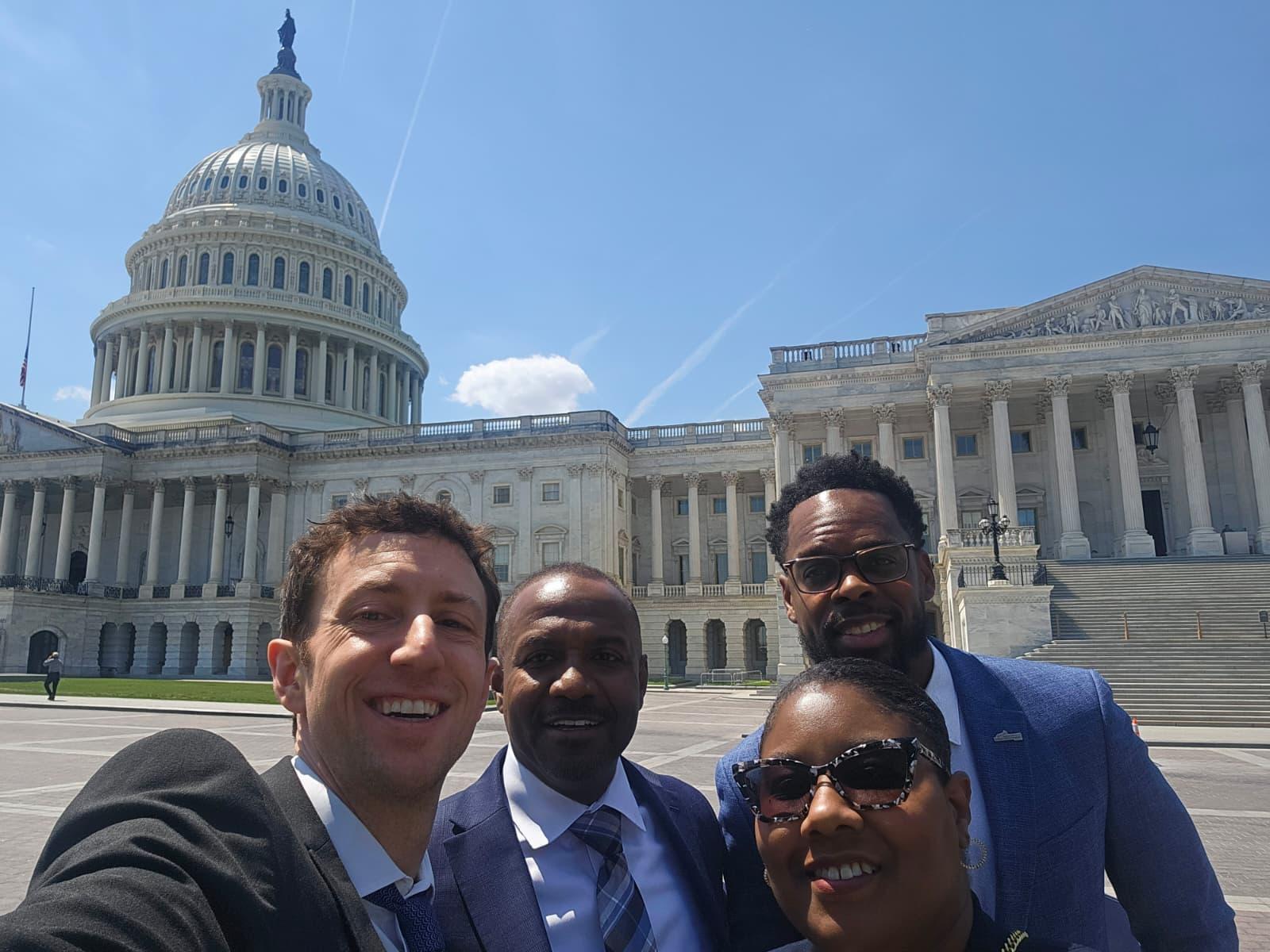
It was those questions based on a stark reality CPAA brought to Washington, D.C. last week.
President Kia Banks, along with Principal Chris Graves (Jordan Community Elementary), Principal Stephen Rouse (Carver Military), and Principal Louis Davis (Barton Elementary), represented CPAA and our parent union, AFSA, in meetings with federal legislators and staff. The focus: federal funding streams that support schools, the gap between expectations placed on school leaders and available resources, and the need for sustained investment in leadership, student supports, and school safety.
“We also have to move past the idea that 'my school is okay.” Our students are not okay if large numbers of students across this city are not okay.” President Kia Banks
“We planted seeds. That’s critical. Too often, leaders wait until past the point of the primary negotiating, until decisions are largely already set. Advocating now about the FY27 budgets at the federal (and soon, state) level helps get our needs into the conversation so we won’t be forgotten at the critical time decisions are made. Now, the follow-up is critical. ” Principal Chris Graves, Jordan Community School
We can do better. We are one of the wealthiest nations in the world. We invest in many priorities. Public education cannot continue to be undervalued and underserved.
“This is about what we constantly hear from our communities and our elected leaders: workforce preparation, skills for the future, economic competitiveness, and leadership on the global stage. This requires investment, support for staff development to meet these goals, and care for staff to provide wellness both physically and emotionally, creating positive workplaces that retain strong staff.” - Principal Chris Graves
What we asked for and what AFSA asked for was straightforward. Do not pull back funding at the exact moment schools are beginning to regain stability. Maintain investment in the supports students rely on every day… mental health services, multilingual programming, special education, and school safety. Because without those, the expectations placed on schools can not be met.
The principals in Washington, D.C. did not walk away with funding in hand or immediate commitments. What they did was no less powerful. They showed up, they spoke up. Each voice makes it harder for those in power to ignore the needs in our schools. That matters. But it is not enough on its own.
So this is where we all must align. Become a dues-paying CPAA member. Get involved. Support CPAA’s Political Action Committee. Stay engaged beyond your school walls. Because gains are not sustained individually… they are sustained collectively. If we want funding to match the expectations placed on our schools, if we want students to be equipped with tools to learn and succeed, it will take all of us to demand it.
We cannot afford to treat this as someone else’s work. Not one principal. Not one union. Not one group. The question we posed is still unresolved: What happens to the gains when the funding disappears? More of a rhetorical question, because we know: they risk disappearing too… and we’ve worked too hard to be okay with that.
That is why we advocate.